Quin AI: Architecting an
Award-Winning SaaS Platform
Lead UX/UI Deisgner & PM

2022 - 2024
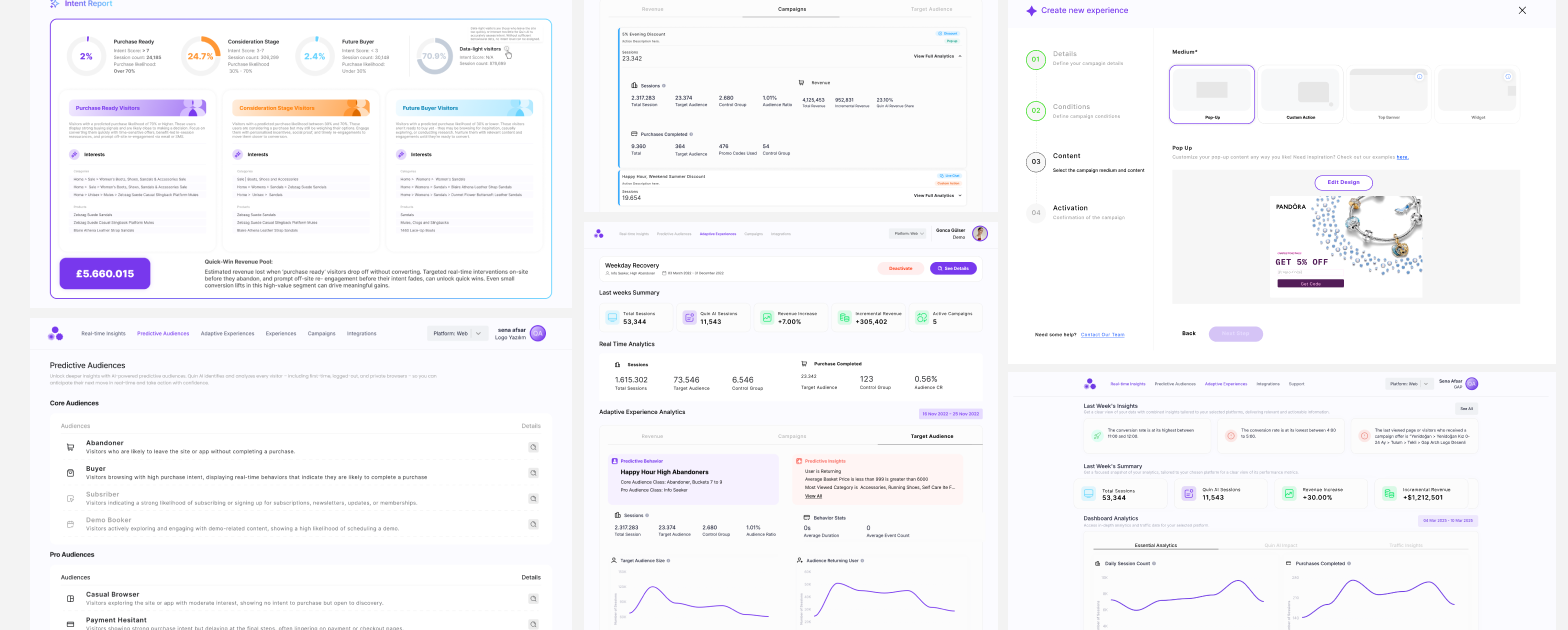
summary
Led the end-to-end redesign of a complex AI dashboard Transformed an unbuildable legacy concept into a robust, scalable product ecosystem while driving customer adoption.
Core Skills
Information Architecture
Brand Identity
Complex Prototyping
Design Systems
TOOLS
Figma & FigJam
Webflow
Jira / Confluence
Microsoft Clarity

The challenge
The legacy platform functioned strictly as an internal tool, completely alienating the end-user. After an outsourced agency delivered a technically unbuildable UI concept, I was brought in to rescue the initiative, define the product architecture, and lead the end-to-end redesign of the dashboard UI.

The approach
I took a 360-degree approach: starting with brand identity and a public website redesign, followed by rigorous documentation of complex AI flows. Only then did I engineer the core dashboard and a native pop-up builder using a scalable design system.

The ımpact
Secured two UK industry awards and successfully transitioned customers to manage complex AI campaigns independently. The platform continues to scale effortlessly.
Significantly increased project delivery speed and reduced development cycles.

01 / FOUNDATION
Untangling the Architecture
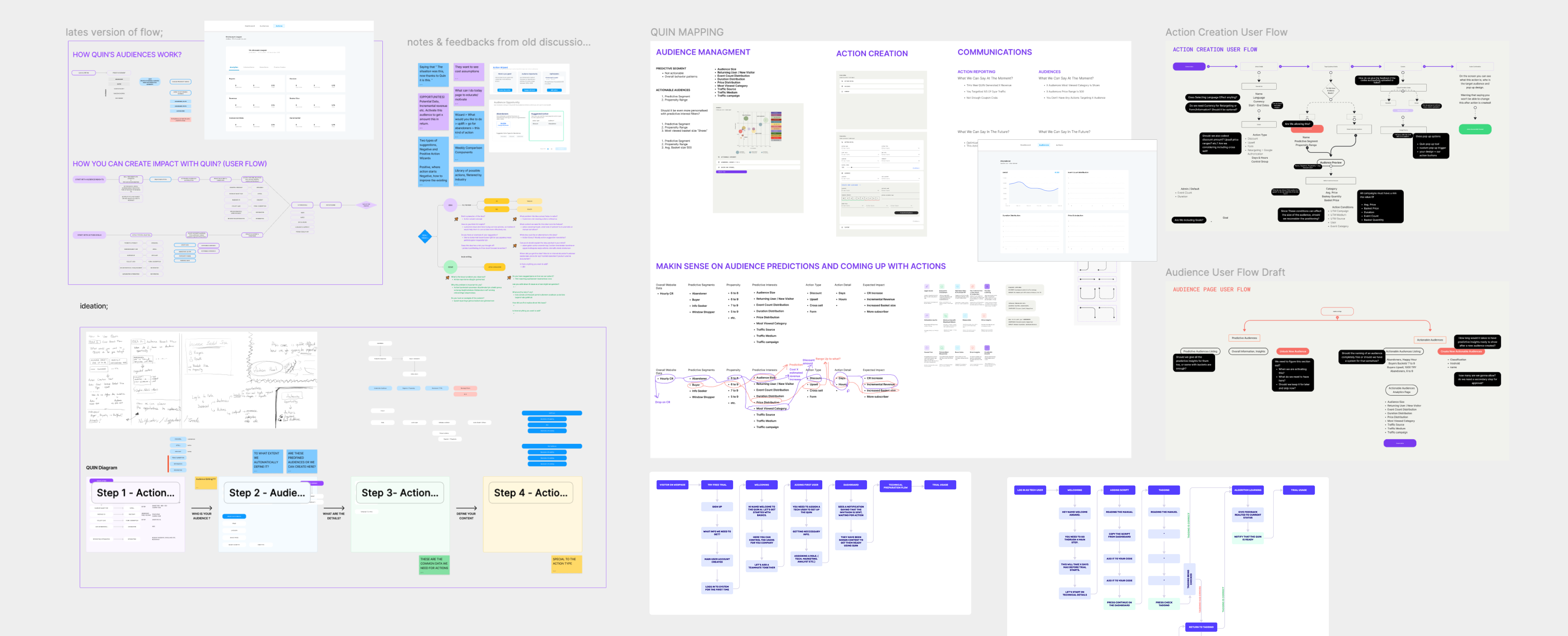
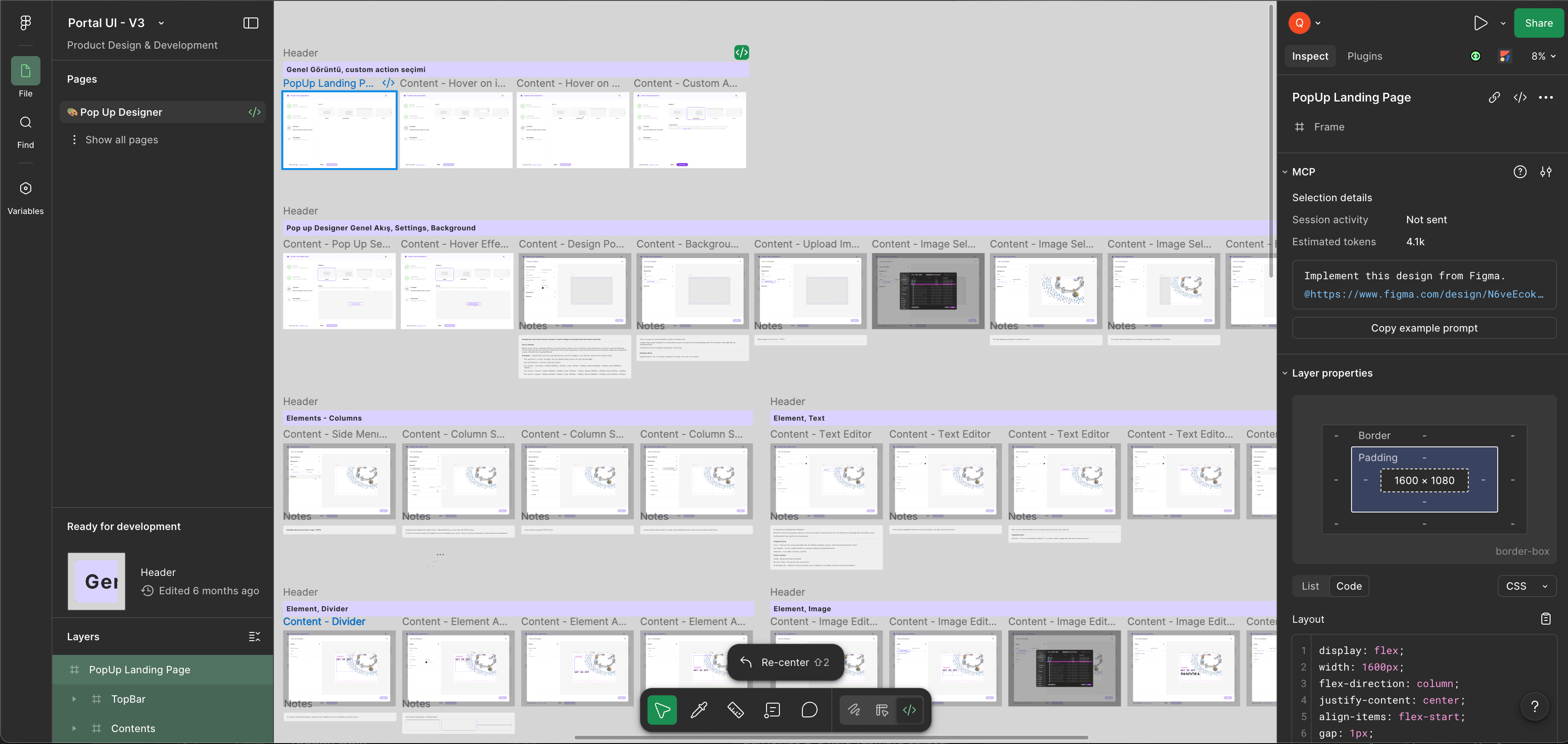
Before opening Figma, I conducted in-depth user research and competitive analysis to map complex feature flows. The previous agency delivered a generic UI that failed to account for technical constraints and user needs. My first task was translating raw, complex AI features into a logical, user-centric architecture.
By mapping these complex workflows into comprehensive flow diagrams and notes, we established a strategic baseline that allowed us to successfully push the new platform version live.
02 / Iteration
Scaling Through New Features
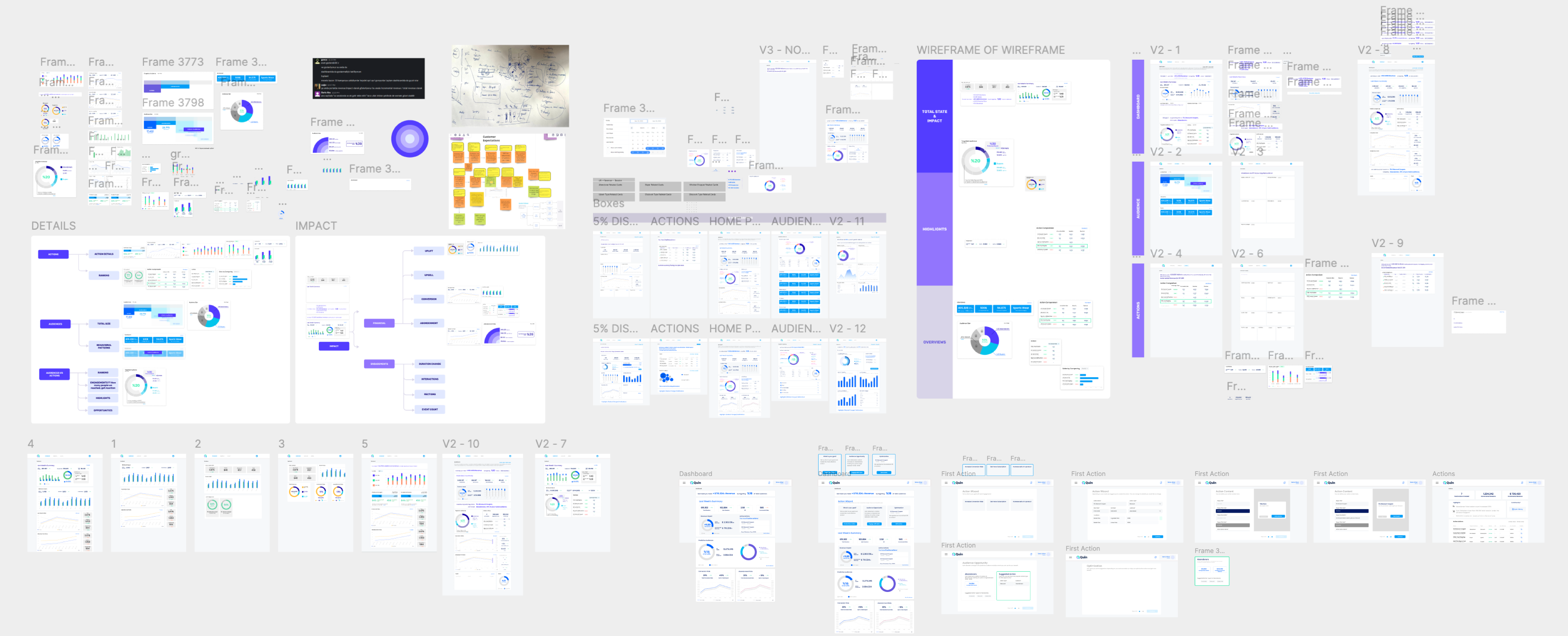
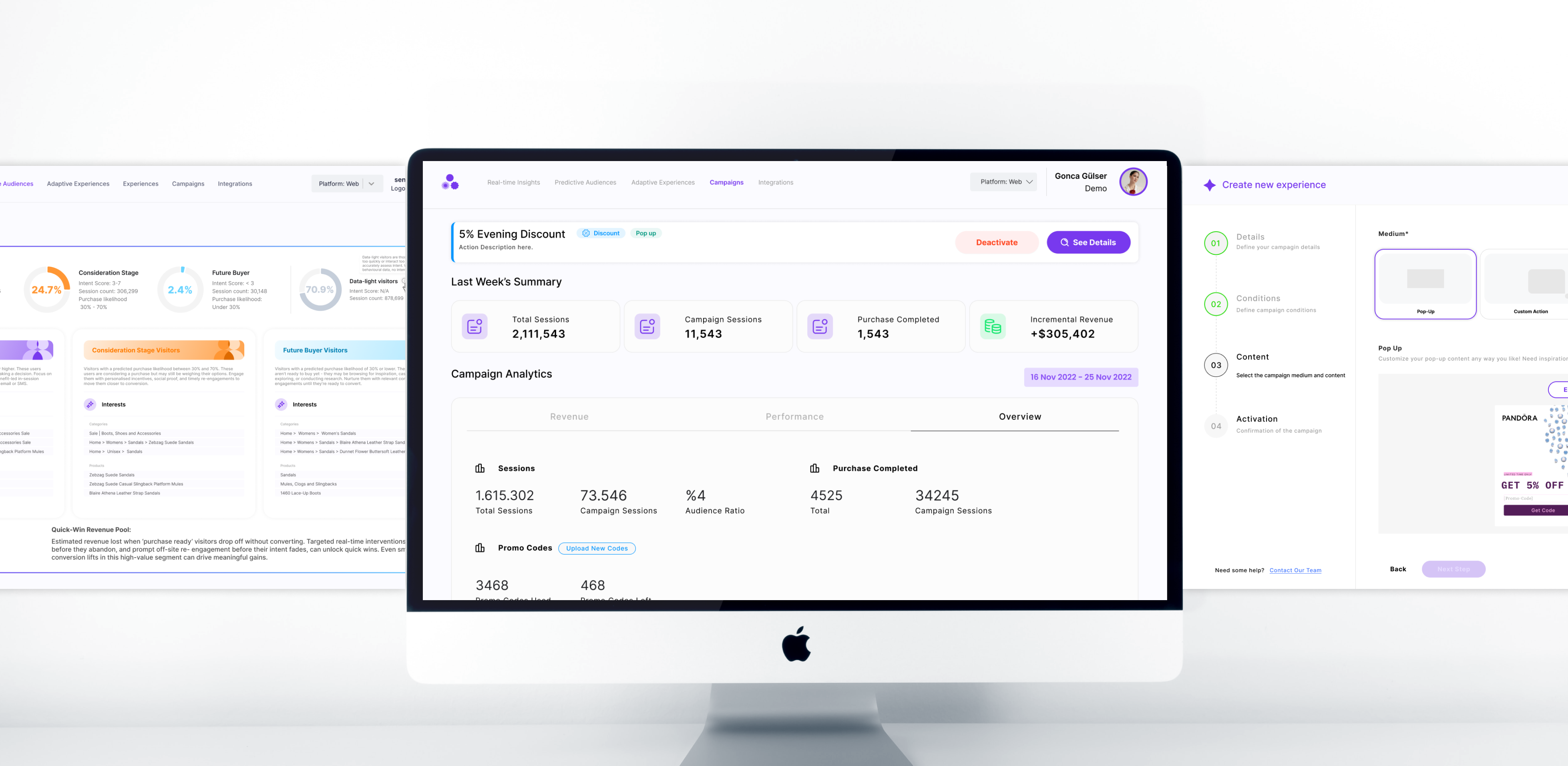
As user needs evolved, the product had to scale continuously. I led cross-functional ideation sessions to unearth emerging pain points, translating those complex requirements into rapid wireframes and ultimately high-fidelity end designs—including a fully native pop-up builder and an advanced action/campaign structure.
03 / Delivery
Bridging Design and Engineering
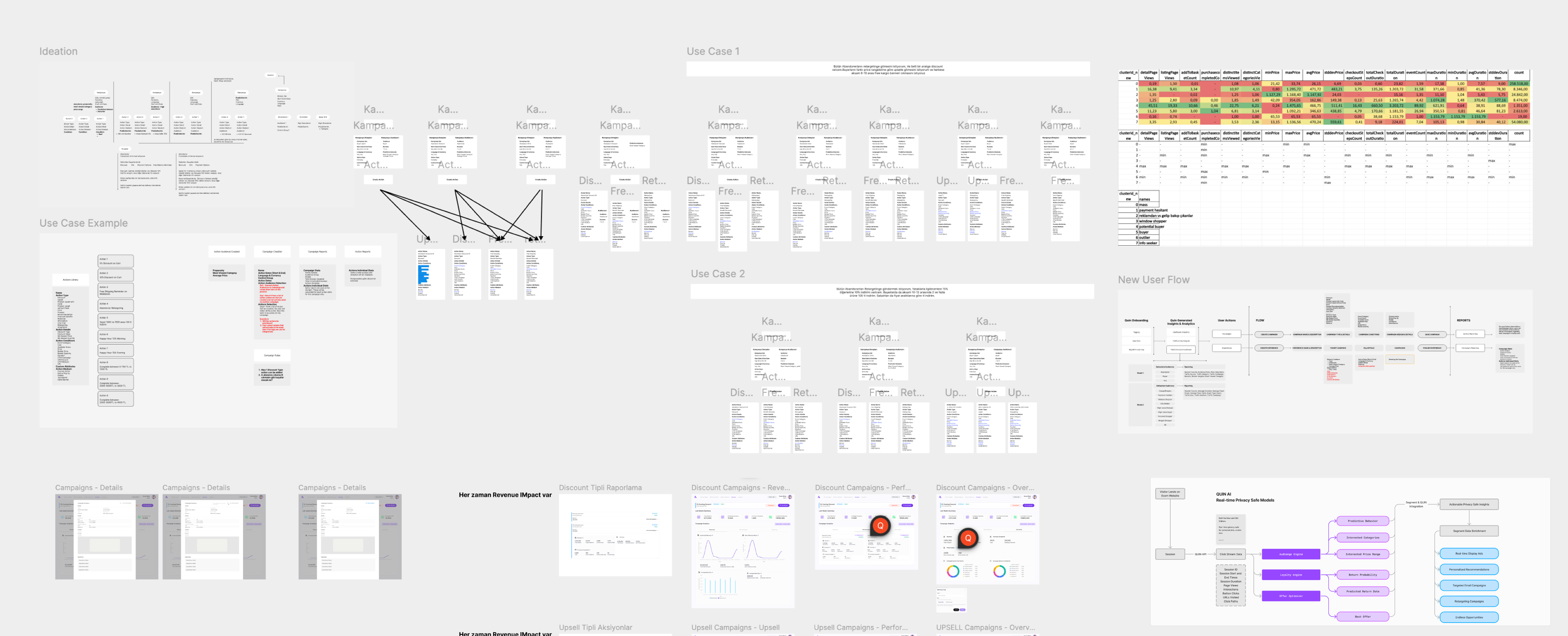
Design handoff is where products often fail. To guarantee flawless delivery, I went beyond static screens. I wrote comprehensive Business Requirement Documents (BRDs) and built highly detailed, interactive prototypes.
I also actively participated in the QA and testing of the final product, ensuring the engineering output matched the UX vision and legal constraints perfectly before reaching the user.
04 / Outcome
The Result: Award-Winning Independence
By owning the product lifecycle from its deepest logic to its final engineering polish, we transformed a stagnant internal tool into a powerful SaaS platform. It secured two UK industry awards and successfully empowered customers to manage their complex AI campaigns completely independently.
05 / Marketing Alignment
The Brand & Website Redesign
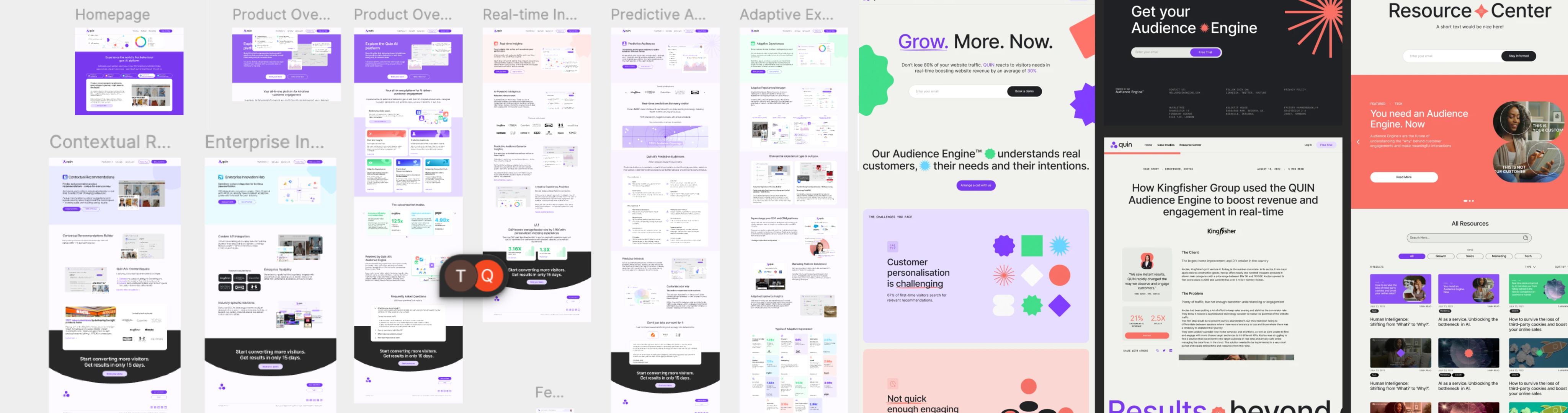
Parallel to the core SaaS platform, the company needed a public face that accurately communicated its technical power. I developed the foundational brand identity guidelines and redesigned the public marketing website, completely bridging the gap between external brand perception and internal product capability.

Quin AI: Architecting an
Award-Winning SaaS Platform
Lead UX/UI Desıgner & PM
2022 - 2024
summary
Led the end-to-end redesign of a complex AI dashboard Transformed an unbuildable legacy concept into a robust, scalable product ecosystem while driving customer adoption.
Core Skills
Information Architecture
Brand Identity
Complex Prototyping
Design Systems
TOOLS
Figma & FigJam
Webflow
Jira / Confluence
Microsoft Clarity
The challenge
The legacy platform functioned strictly as an internal tool, completely alienating the end-user. After an outsourced agency delivered a technically unbuildable UI concept, I was brought in to rescue the initiative, define the product architecture, and lead the end-to-end redesign of the dashboard UI.
The approach
I took a 360-degree approach: starting with brand identity and a public website redesign, followed by rigorous documentation of complex AI flows. Only then did I engineer the core dashboard and a native pop-up builder using a scalable design system.
The ımpact
Secured two UK industry awards and successfully transitioned customers to manage complex AI campaigns independently. The platform continues to scale effortlessly.
Significantly increased project delivery speed and reduced development cycles.

01 / FOUNDATION
Untangling the Architecture
Before opening Figma, I conducted in-depth user research and competitive analysis to map complex feature flows. The previous agency delivered a generic UI that failed to account for technical constraints and user needs. My first task was translating raw, complex AI features into a logical, user-centric architecture.
By mapping these complex workflows into comprehensive flow diagrams and notes, we established a strategic baseline that allowed us to successfully push the new platform version live.
02 / Iteration
Scaling Through New Features
As user needs evolved, the product had to scale continuously. I led cross-functional ideation sessions to unearth emerging pain points, translating those complex requirements into rapid wireframes and ultimately high-fidelity end designs—including a fully native pop-up builder and an advanced action/campaign structure.
03 / Delivery
Bridging Design and Engineering
Design handoff is where products often fail. To guarantee flawless delivery, I went beyond static screens. I wrote comprehensive Business Requirement Documents (BRDs) and built highly detailed, interactive prototypes.
I also actively participated in the QA and testing of the final product, ensuring the engineering output matched the UX vision and legal constraints perfectly before reaching the user.
04 / Outcome
The Result: Award-Winning Independence
By owning the product lifecycle from its deepest logic to its final engineering polish, we transformed a stagnant internal tool into a powerful SaaS platform. It secured two UK industry awards and successfully empowered customers to manage their complex AI campaigns completely independently.
05 / Marketing Alignment
The Brand & Website Redesign
Parallel to the core SaaS platform, the company needed a public face that accurately communicated its technical power. I developed the foundational brand identity guidelines and redesigned the public marketing website, completely bridging the gap between external brand perception and internal product capability.

Quin AI: Architecting an
Award-Winning SaaS Platform
Lead UX/UI Designer & PM
2022 - 2024
summary
Led the end-to-end redesign of a complex AI dashboard Transformed an unbuildable legacy concept into a robust, scalable product ecosystem while driving customer adoption.
Core Skills
Information Architecture
Brand Identity
Complex Prototyping
Design Systems
TOOLS
Figma & FigJam
Webflow
Jira / Confluence
Microsoft Clarity
The challenge
The legacy platform functioned strictly as an internal tool, completely alienating the end-user. After an outsourced agency delivered a technically unbuildable UI concept, I was brought in to rescue the initiative, define the product architecture, and lead the end-to-end redesign of the dashboard UI.
The approach
I took a 360-degree approach: starting with brand identity and a public website redesign, followed by rigorous documentation of complex AI flows. Only then did I engineer the core dashboard and a native pop-up builder using a scalable design system.
The ımpact
Secured two UK industry awards and successfully transitioned customers to manage complex AI campaigns independently. The platform continues to scale effortlessly.
Significantly increased project delivery speed and reduced development cycles.

01 / FOUNDATION
Untangling the Architecture
Before opening Figma, I conducted in-depth user research and competitive analysis to map complex feature flows. The previous agency delivered a generic UI that failed to account for technical constraints and user needs. My first task was translating raw, complex AI features into a logical, user-centric architecture.
By mapping these complex workflows into comprehensive flow diagrams and notes, we established a strategic baseline that allowed us to successfully push the new platform version live.
02 / Iteration
Scaling Through New Features
As user needs evolved, the product had to scale continuously. I led cross-functional ideation sessions to unearth emerging pain points, translating those complex requirements into rapid wireframes and ultimately high-fidelity end designs—including a fully native pop-up builder and an advanced action/campaign structure.
03 / Delivery
Bridging Design and Engineering
Design handoff is where products often fail. To guarantee flawless delivery, I went beyond static screens. I wrote comprehensive Business Requirement Documents (BRDs) and built highly detailed, interactive prototypes.
I also actively participated in the QA and testing of the final product, ensuring the engineering output matched the UX vision and legal constraints perfectly before reaching the user.
04 / Outcome
The Result: Award-Winning Independence
By owning the product lifecycle from its deepest logic to its final engineering polish, we transformed a stagnant internal tool into a powerful SaaS platform. It secured two UK industry awards and successfully empowered customers to manage their complex AI campaigns completely independently.
05 / Marketing Alignment
The Brand & Website Redesign
Parallel to the core SaaS platform, the company needed a public face that accurately communicated its technical power. I developed the foundational brand identity guidelines and redesigned the public marketing website, completely bridging the gap between external brand perception and internal product capability.